
Burnout Part 1: Why Am I So Tired?
Remember when work and life felt manageable? Now you're fatigued before your first meeting, and the "Sunday scaries" starts on Saturday. You're not alone — over 50-70% of us can experience burnout at some point.
Here's what's really happening: burnout is like working against the grain of wood. Go with the grain? Smooth sailing. Against it? Splinters, resistance, eventually the wood cracks. That's burnout — persistently ignoring what your body, mind, and spirit actually need.
The WHO defines burnout as chronic exhaustion, cynicism, and reduced capacity that develops when stress stays high and recovery stays low. Although it's formally classified as work-related, the same pattern can show up in caregiving and other demanding responsibilities.
Your Brain on Burnout
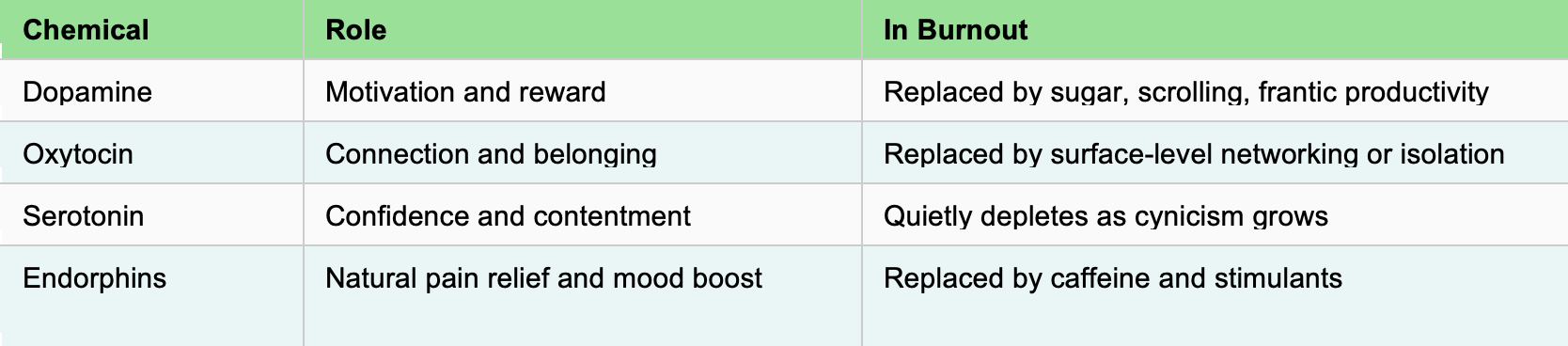
Your wellbeing depends on the balance of four brain chemicals — what psychologist TJ Power calls your DOSE:
There's another layer: your nervous system has an unconscious alarm system called neuroception, constantly scanning for safety or threat. Think of it like a ladder with three rungs:
● Top rung: Safe, calm, connected — your DOSE flows naturally
● Middle rung: Fight-or-flight mode — dopamine spikes but everything else crashes
● Bottom rung: Complete shutdown — all DOSE chemicals depleted
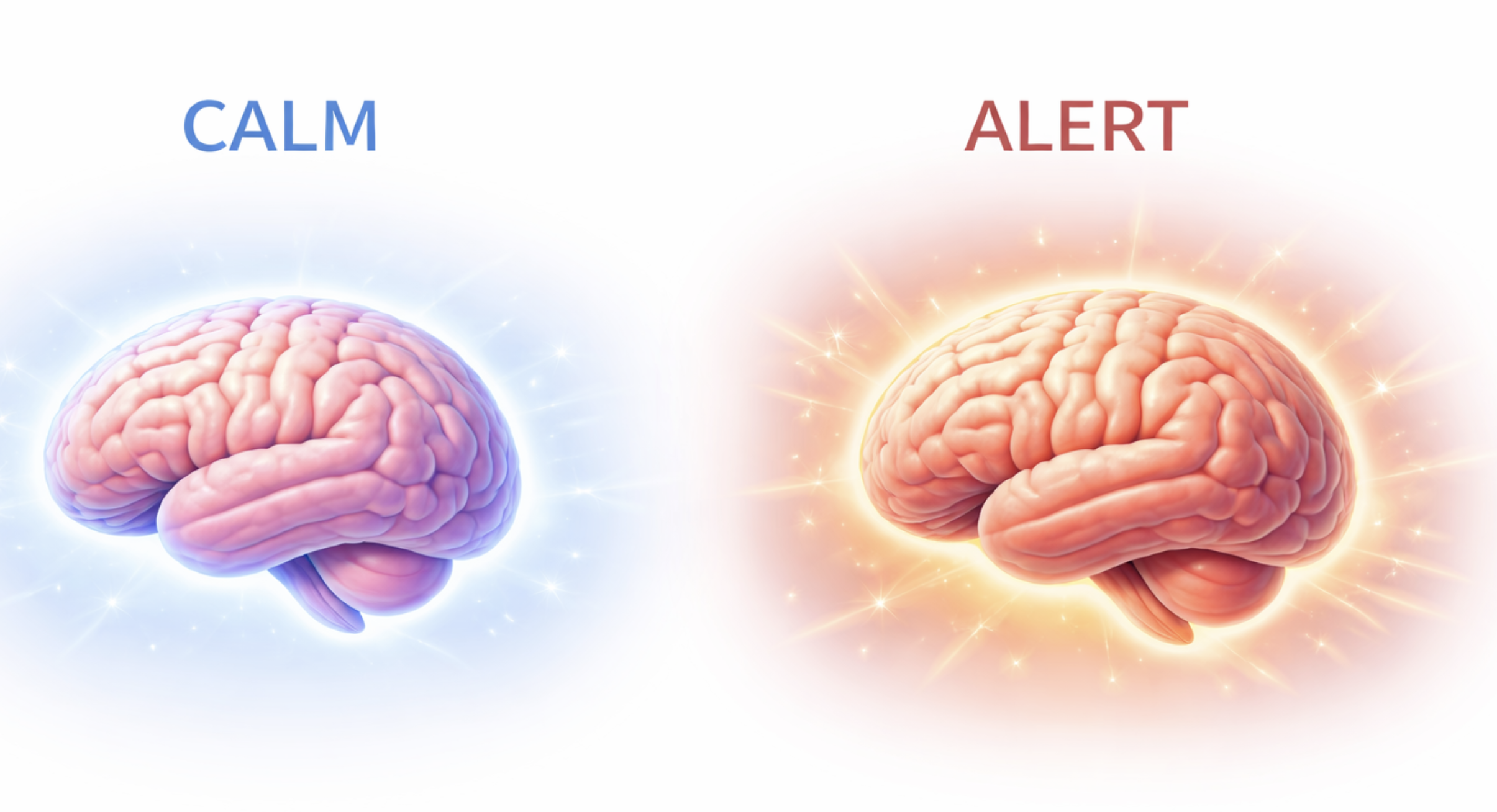
Burnout is getting stuck on those lower rungs, unable to climb back to safety.
Why Your Environment Matters
While we've talked about what happens in your mind and body, the reality is that your environment, your workplace culture, organisational policies, workload expectations, and societal pressures plays a massive role in whether you burn out or thrive. Change is often needed within organisations and communities, and we need changes to policies and approaches that promote healthy ways of working. This is especially relevant in Aotearoa's government and business sectors, where workplace cultures can either support or undermine wellbeing.
When your environment demands constant availability, rewards overwork, lacks psychological safety, or makes it difficult to set boundaries, your nervous system stays locked in threat mode regardless of how many self-care strategies you try. If your workplace consistently signals threat — unrealistic deadlines, inadequate resources, lack of autonomy, toxic dynamics, your DOSE chemistry will deplete no matter how much you meditate or exercise.
True recovery from burnout requires both individual nervous system regulation and environmental change. Sometimes that means having difficult conversations with your manager about workload. Sometimes it means advocating for better organisational policies. Sometimes it means recognising that the system is broken and you need to find a healthier work environment. Your wellbeing isn't just about managing your internal state it's about ensuring your external environment supports, rather than sabotages, your health and wellbeing.
The Stages of Burning Out
STAGE 1: The Stress Response
You can't switch off. Quality sleep becomes difficult even though you're exhausted. You're still performing well on the outside, but inside you're starting to run on fumes. Dopamine spikes from constant tasks, but serotonin and oxytocin quietly deplete.
STAGE 2: The Energy Crisis
Cynicism creeps in. Work that mattered feels pointless. You feel mentally and physically tired all the time and may get physically sick as your immune system is impaired. Dopamine is depleted, endorphins are low, and genuine connection feels unrealistic.
STAGE 3: The Wall
You feel emotionally numb or volatile. Chronic pain, digestive issues, complete exhaustion. You're seriously considering quitting — not because you have a plan, but because continuing feels impossible.

Te Whare Tapa Whā, developed by Sir Mason Durie, offers a powerful lens here. Burnout can happen when our Hauora is depleted across mind (taha hinengaro), body (taha tinana), relationships (taha whānau), spirit (taha wairua), and our connection to the land and identity (whenua).
Why This Matters
The stage you're in determines recovery time. Catch it at Stage 1? A few weeks of intentional rest and boundary setting. Hit Stage 3? It could be months of recovery, usually requiring professional support.
Recovery is possible at every stage. You just need to stop working against your grain, help your nervous system find safety again, and restore some balance to your nerves system naturally.
In Burnout Part 2: Getting Your Energy Back, we'll explore exactly how to do that using practical strategies that work with your body's wisdom, not against it. At 3 Big Things, we understand burnout through a mind, body, environment lens to help you leave a session feeling understood and practically supported.
Want to book a session to understand what's going on for you: contact@3bigthings.co.nz